 November 16, 2026
 6 min read mins read
 0 Comments
Going international and expanding to the USA is a great achievement. The US market is huge and provides tremendous opportunities, capital and credibility. Nonetheless, operating a business with cross-border challenges and their attendant legal, tax and regulatory demands are like navigating through a maze.
A large proportion of founders opt in to the process without being fully aware of the regulations. As a result of this, they face penalties, make common compliance mistakes, frozen bank accounts or even the closing down of their entities.
If you want to take the route to success, it is important to know that you can collaborate with professional and established formation and advisory firms such as OCPbiz and stay on the right track from the beginning.
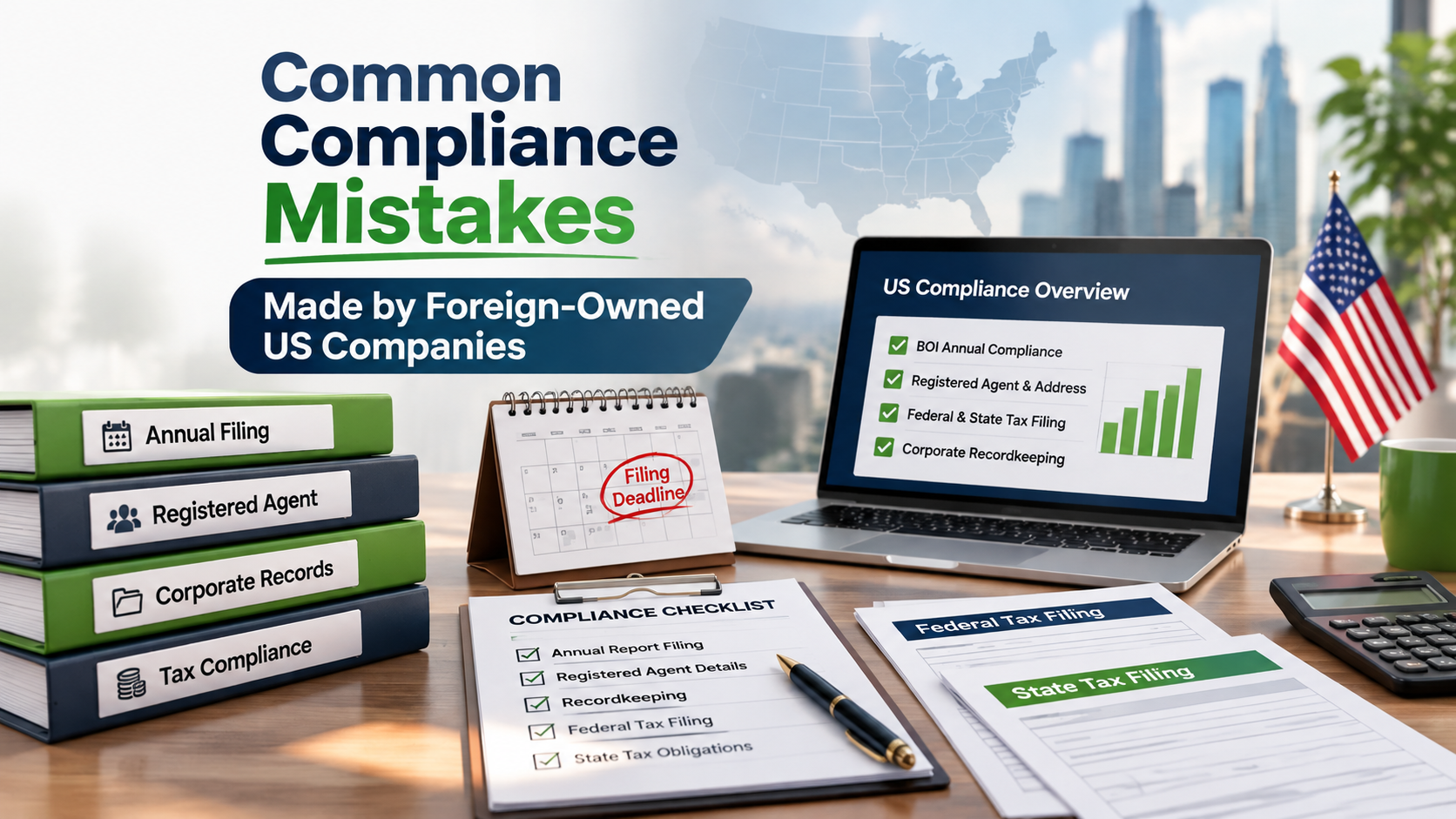
Common Compliance Mistakes that are Made
We examine the most frequent common compliance mistakes, that foreign owned U.S. companies make, and how to avoid them in this guide.
Amidst all the llc filing mistakes, a common LLC filing error is to believe that your company is legally established once you have registered it.
One of the biggest problems that can arise for an international entrepreneur are the foreign founder tax mistakes. Many founders think that if their own LLC is not in the USA and doesn’t have any US employees or storefront, they don’t have to pay any taxes in the USA.
4. Falling For a Credit Card Scam
Co-mingling funds is a recipe for disaster in foreign owned business compliance.
5. Not having an adequate registered agent representation
All U.S. businesses have to have a registered agent in the state where they were incorporated to receive official legal and tax notices.
An Essential Compliance Checklist and Documents
will help you determine which documents are crucial for keeping on hand.
Make sure the following important documents are timely filed and maintained to protect your business:
| Document / Requirement | Purpose | Frequency |
| Articles of Organization | Will officially create your LLC in the state that you choose. | One-time upon setup |
| EIN (Employer Identification Number) | Must have for opening a bank account and for hiring. | One-time upon setup |
| State Annual Report | Maintains your company in “Good Standing.” | Annually (varies by state) |
| IRS Forms 5472 & 1120 | Report any foreign ownership and transactions to the IRS. | Annually |
| BOI Report (FinCEN) | Reports the beneficial owners to the US government. | One-time (plus updates) |
6. Incorrectly Understanding the New Fincen Beneficial Ownership Information (BOI) Rule
A relatively new area where many commit us company compliance errors is the Corporate Transparency Act.
To prevent us tax filing mistakes, one should be careful, organized and proactive when dealing with local laws. You can keep your business safe and on the path to growth by being proactive, before deadlines and knowing what taxes to expect.
To prevent annual report mistakes LLC filing errors, you need to make sure that you're selecting the right state to incorporate in, have a reliable registered agent, and get your EIN right and have professional business formation services to handle the paperwork.
Yes. Failure to meet the compliance requirements may lead to significant IRS penalties of $25,000 (for not filing Form 5472). The state late penalties, loss of good standing and/or final administrative dissolution of your company.
These U.S. company compliance mistakes can undermine corporate liability coverage, bar your company from accessing its bank accounts, impose devastating financial consequences, and severely jeopardize your legal standing in the U.S. Looking to make your US expansion easy and prevent costly common compliance errors? Talk to one of the experts at OCPbiz today and get the advice you need for founders of an international firm.
Many international founders believe that they are not required to file anything if they aren't resident in the US and don't have a physical outlet. Even though single-member LLCs owned by foreigners don't have to pay income taxes, they still need to file informational returns, such as Form 5472 and 1120, each year.
Most of the us llc compliance mistakes include not filing state annual report requirements, not filing IRS Form 5472 for disregarded entities, commingling personal and business funds, and not being aware of the new FinCEN BOI reporting requirements.

Thank you for your message. It has been sent successfully.